
ESG Reporting Shouldn’t Be Manual
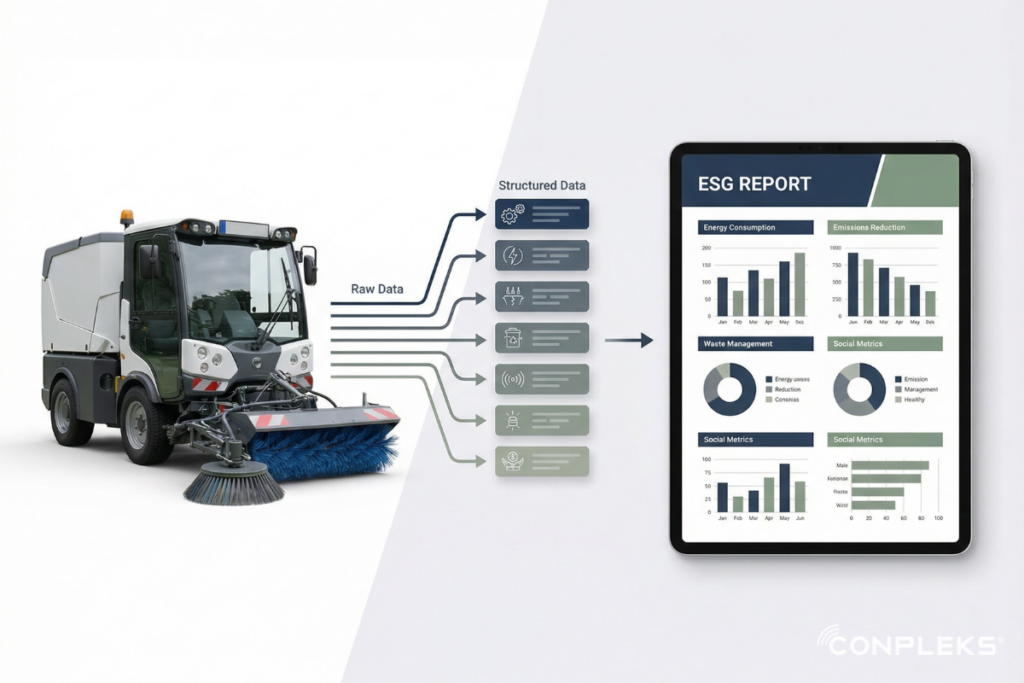
For many machine manufacturers, ESG reporting has become an unavoidable part of doing business. Customers demand transparency. Regulators require documentation. Procurement processes increasingly include sustainability criteria.
And yet, in many organisations, ESG documentation is still handled manually — through spreadsheets, email exchanges, and time-consuming follow-ups with customers.
The irony?
Most of the relevant data already exists.
Modern machines continuously generate valuable operational data. Usage patterns, fuel or energy consumption, operating hours, load factors, and performance metrics are already captured by onboard systems. The challenge is not data availability — it is accessibility.
Too often, this data remains locked inside the machine.
With Clara Cloud, ESG documentation becomes an integrated part of the product itself. Instead of manual reporting workflows, machine data is automatically collected, structured, and made available for documentation purposes.
This includes:
-
Verified usage data
-
CO₂ and energy consumption metrics
-
Automated data capture without spreadsheets
-
No need for manual customer follow-ups
When the machine documents its own environmental impact by design, compliance is no longer an administrative burden. It becomes a built-in capability.
This shift changes the conversation from reactive reporting to proactive product value. Manufacturers can provide transparent, reliable ESG documentation as part of their offering — strengthening customer trust and gaining a measurable competitive advantage.
Compliance should not be an afterthought.
It should be engineered into the product.